The debate between OEM (Original Equipment Manufacturer) and aftermarket oil filters is one of the most common questions distributors face. While price is often the first consideration, the real differences lie in filtration efficiency, construction quality, and long-term engine protection. Understanding these differences helps you stock the right products for your market and educate your customers effectively.
What Makes an Oil Filter Work?
An oil filter's primary job is to remove contaminants — metal particles, carbon deposits, dirt — from engine oil before it circulates through the engine. Key components include:
- Filter media: The pleated paper or synthetic material that captures particles
- Anti-drainback valve: Prevents oil from draining out of the filter when the engine is off (critical for top-mounted filters)
- Bypass valve: Opens if the filter clogs, allowing unfiltered oil to circulate rather than starving the engine
- Center tube: Provides structural support to prevent media collapse under pressure
- Gaskets and seals: Ensure leak-free installation and proper sealing
OEM Oil Filters: The Benchmark
OEM filters are designed by the vehicle manufacturer (or their tier-1 supplier like Mann+Hummel, Mahle, or Denso) to meet exact specifications for a particular engine. Advantages include:
- Precision engineering: Media area, pore size, and bypass pressure are calibrated for specific engine oil flow rates
- Quality consistency: Strict manufacturing tolerances and quality control
- Warranty compliance: Using OEM filters maintains vehicle warranty coverage
- Brand trust: Customers associate OEM parts with reliability
However, OEM filters come at a significant price premium — typically 2-3x the cost of quality aftermarket equivalents. For distributors, this means lower margins and higher inventory costs.
Aftermarket Oil Filters: The Value Proposition
Quality aftermarket filters from reputable manufacturers can match or exceed OEM performance at a lower price point. The key is distinguishing between quality aftermarket and budget/cheap filters.
Quality Aftermarket (BAIKUAN AUTO Standard)
- Filtration efficiency: 95%+ at 20-25 microns, comparable to OEM
- Media: High-quality cellulose or blended media with proper pleat count
- Anti-drainback valve: Silicone (not nitrile) for heat resistance and longevity
- Bypass valve: Calibrated to OEM pressure specifications (typically 8-14 PSI)
- Construction: Steel center tube, robust base plate, proper crimping
- Certifications: ISO 9001, IATF 16949 manufacturing standards
Budget Aftermarket (Avoid These)
- Thin media: Lower filtration efficiency, may pass harmful particles
- Nitrile anti-drainback valve: Hardens and cracks with heat, causing dry starts
- Weak bypass valve: May open too early (bypassing filtration) or not at all (engine oil starvation)
- Plastic center tube: Can collapse under high oil pressure
- Poor crimping: May leak or come apart under pressure
Critical fact: A cheap oil filter that fails can cause thousands of dollars in engine damage. The $2 savings per filter is never worth the risk.
Key Performance Metrics to Compare
Filtration Efficiency
Measured as the percentage of particles captured at a specific micron size. OEM filters typically achieve 95-98% at 20 microns. Quality aftermarket filters from BAIKUAN AUTO match this performance. Budget filters may drop to 70-80%, allowing significant contaminant passage.
Dirt-Holding Capacity
The amount of contaminants a filter can hold before the bypass valve opens. More pleats and higher-quality media mean greater capacity and longer service life. OEM and quality aftermarket filters typically offer 10-15 grams of capacity; budget filters may offer only 5-8 grams.
Cold Flow Characteristics
Important for markets with cold winters. Quality filters use media that maintains permeability at low temperatures, preventing excessive pressure drop that could trigger the bypass valve during startup.
Spin-On vs Cartridge Filters
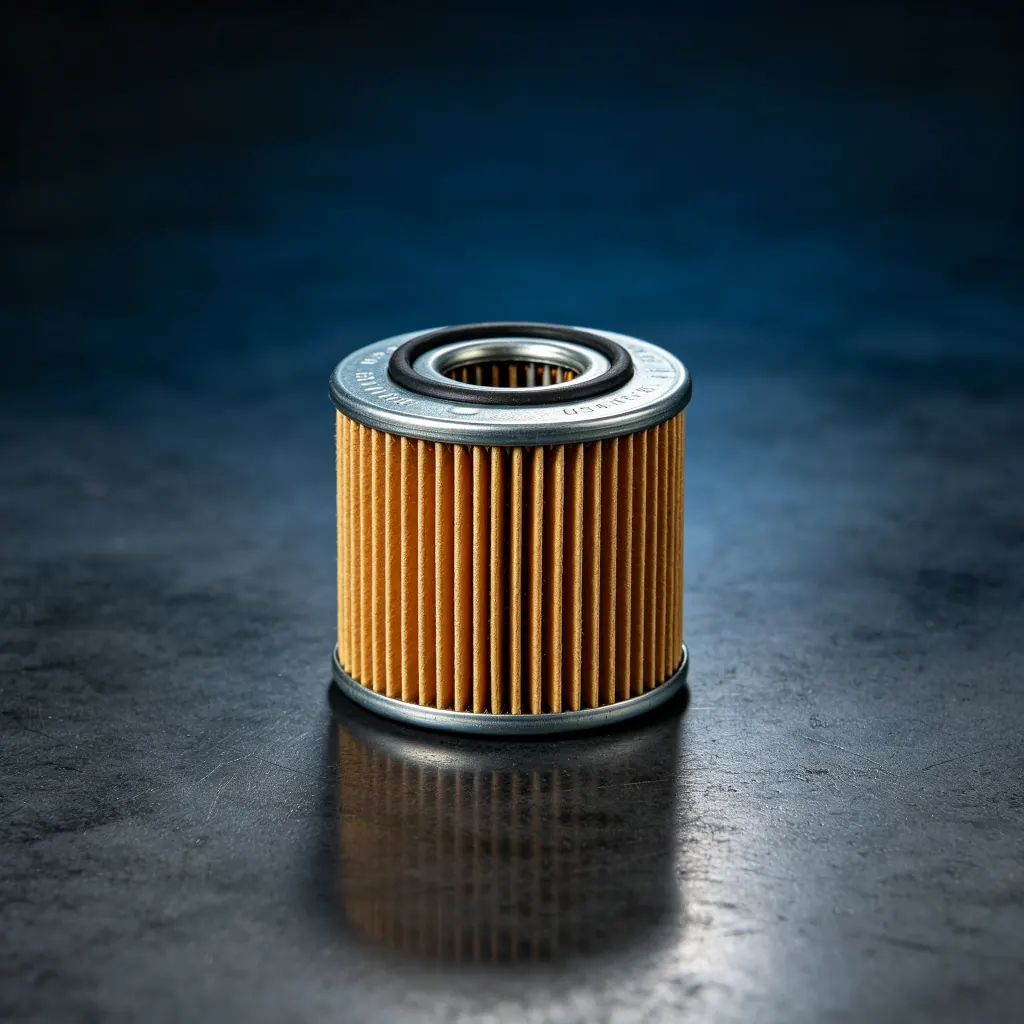
Modern vehicles are increasingly using cartridge-style (element-only) filters instead of traditional spin-on canisters. This trend is driven by environmental regulations (less waste metal) and cost reduction. Distributors should stock both types:
- Spin-on: Dominant in older vehicles, Asian and American marques, and commercial vehicles
- Cartridge: Standard in most European vehicles (BMW, Mercedes, VW, Audi, Peugeot, Citroen) and many newer Asian models
BAIKUAN AUTO offers both spin-on and cartridge oil filters with cross-reference coverage for 5,000+ applications.
How to Position Aftermarket Filters to Customers
- Emphasize certifications: IATF 16949 and ISO 9001 demonstrate manufacturing quality
- Offer comparison data: Show filtration efficiency test results vs OEM
- Provide warranty: A product warranty builds confidence
- Educate on risks: Explain why the cheapest filter is a false economy
- Private label option: Your own brand on quality filters builds customer loyalty
Conclusion
The OEM vs aftermarket debate ultimately comes down to quality sourcing. A well-manufactured aftermarket oil filter can provide equivalent engine protection at 40-60% lower cost than OEM, offering better margins for distributors and better value for customers. The risk lies in budget filters that cut corners on critical components. BAIKUAN AUTO oil filters are manufactured to OEM-equivalent standards with full quality documentation and cross-reference data.
Want to test our oil filter quality? Request free samples and compare them side-by-side with OEM filters.
Frequently Asked Questions
Can a quality aftermarket oil filter match OEM performance?
Yes. Quality aftermarket filters reach 95%+ filtration efficiency at 20-25 microns, comparable to the 95-98% at 20 microns of OEM filters, at 40-60% lower cost.
What should I check inside a budget oil filter?
Thin media, a nitrile anti-drainback valve that hardens with heat, a weak or badly calibrated bypass valve, a plastic centre tube that can collapse, and poor crimping. Quality filters use a silicone anti-drainback valve and a steel centre tube.
What bypass valve pressure is normal?
Bypass valves are calibrated to OEM specifications, typically 8-14 PSI.