Air filters and cabin filters are two of the most commonly confused replacement parts in the automotive aftermarket. Both filter air, but they serve completely different purposes — one protects your engine, the other protects your passengers. For distributors and retailers, understanding these differences is essential for accurate cross-referencing and customer education.
What Does an Engine Air Filter Do?
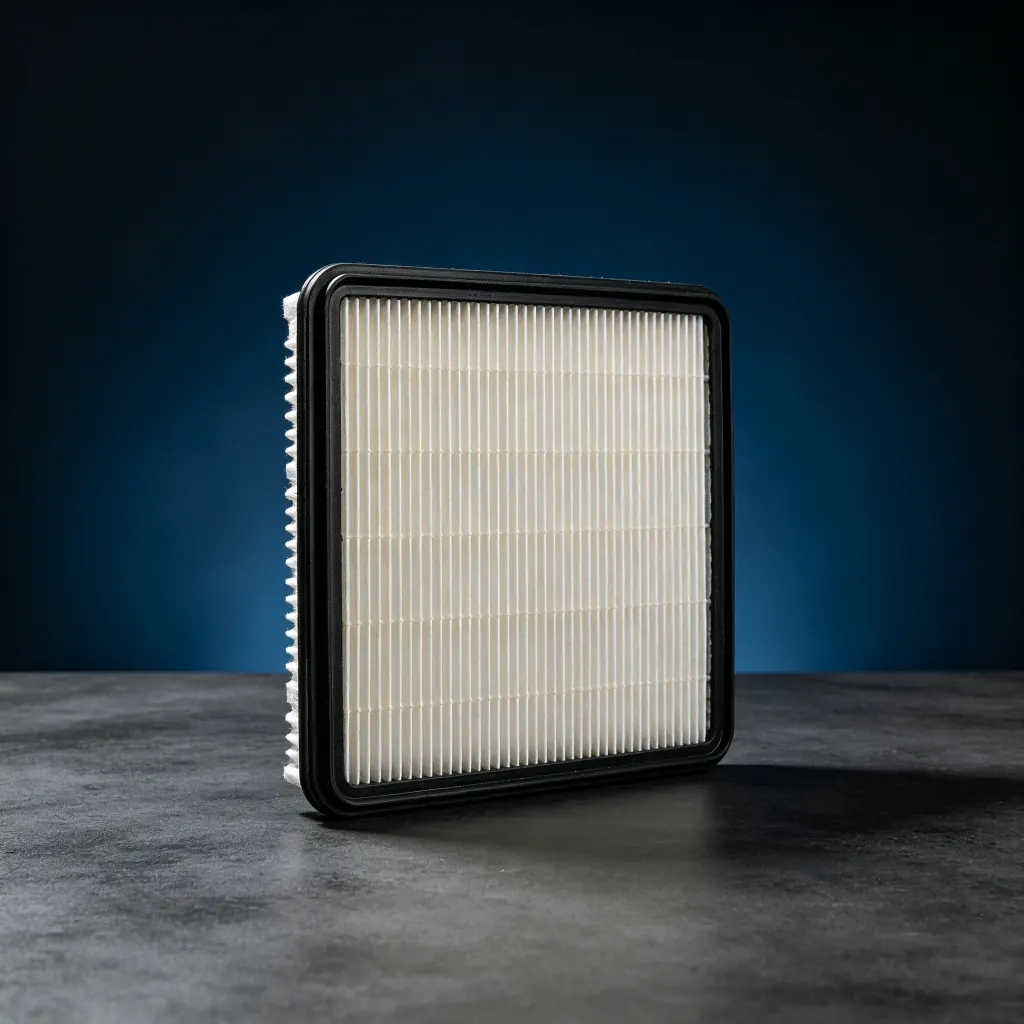
The engine air filter sits between the intake manifold and the throttle body, cleaning the air before it enters the combustion chamber. A typical gasoline engine burns approximately 10,000 liters of air for every liter of fuel, making air quality critical to engine performance and longevity.
- Function: Removes dust, dirt, pollen, and debris from intake air
- Location: Engine bay, inside the air filter housing
- Impact of failure: Reduced airflow causes poor fuel economy, loss of power, and potential engine damage from abrasive particles
- Typical replacement: Every 15,000-30,000 km (more frequently in dusty environments)
What Does a Cabin Air Filter Do?
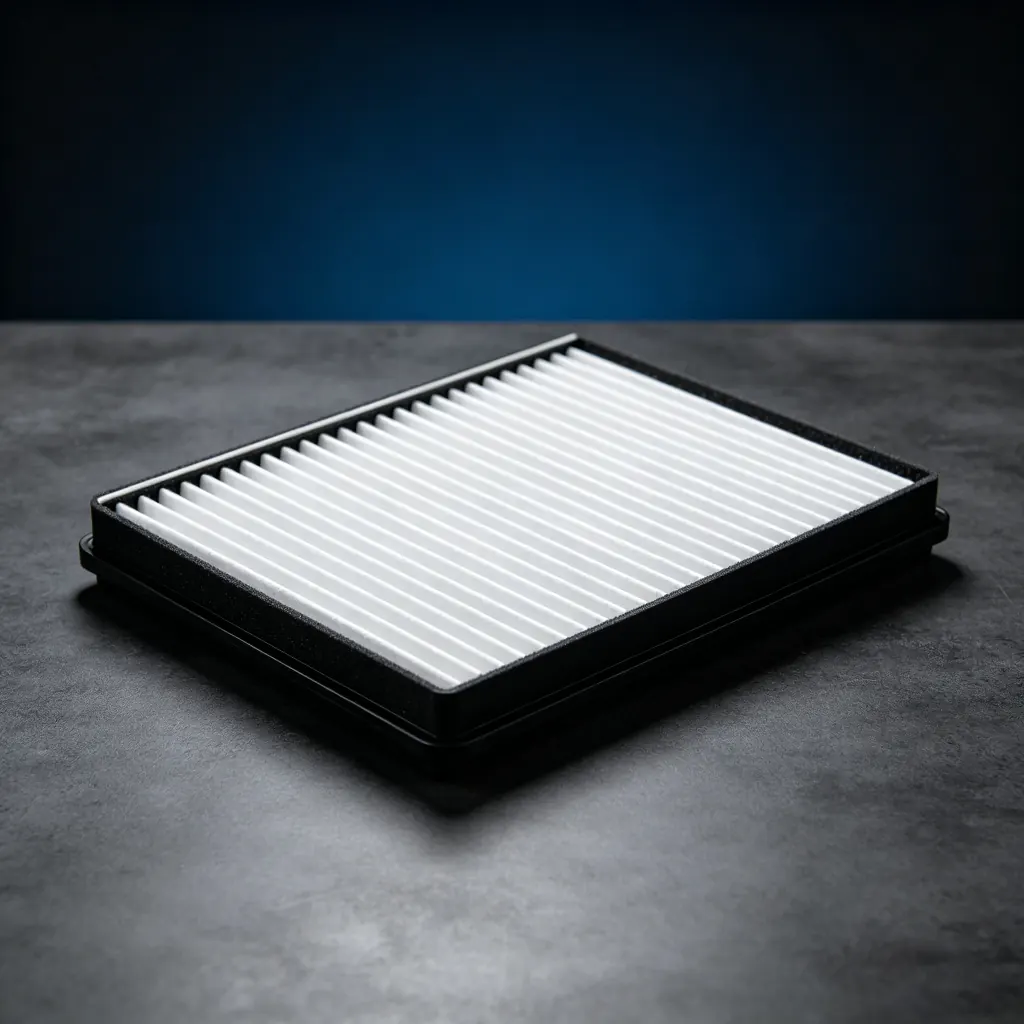
The cabin air filter (also called pollen filter or AC filter) cleans the air entering the vehicle's HVAC system. It was first introduced in European luxury cars in the 1980s and is now standard on most modern vehicles.
- Function: Filters dust, pollen, odors, and pollutants from air entering the passenger cabin
- Location: Behind the glove box or under the dashboard, near the blower motor
- Impact of failure: Reduced HVAC airflow, unpleasant odors, fogging windows, and poor indoor air quality
- Typical replacement: Every 10,000-20,000 km (annually for most drivers)
Key Differences at a Glance
The table below puts the two parts side by side using the specifications we build to.
| Feature | Engine air filter | Cabin air filter |
|---|---|---|
| Location | Engine bay, inside the air filter housing | Behind the glove box or under the dashboard |
| What it protects | Engine components: pistons, cylinders and the airflow sensor | Passengers and the HVAC system |
| Filter media | Pleated paper of 100-130 g/m² or cotton gauze, with wire mesh support | Electrostatically charged non-woven fabric, activated carbon of 400-600 g/m², or HEPA-grade media |
| What it removes | Dust, dirt, pollen and debris from the intake air | Dust, pollen, PM2.5, odours, exhaust fumes, VOCs, ozone and NOx |
| Airflow demand | High: about 10,000 litres of air for every litre of fuel | Lower: limited to the HVAC blower volume |
| Replacement interval | 15,000-30,000 km, sooner in dusty conditions | 10,000-20,000 km, annually for most drivers |
| Symptoms when clogged | Higher fuel consumption, loss of power and risk of engine damage from abrasive particles | Weak airflow, unpleasant odours, fogging windows and poor cabin air quality |
Need the actual part numbers? See our cabin filter range with cross-reference data for European, Japanese, Korean and American vehicles.
Types of Cabin Filters
Particle Filters (Standard)
Made of electrostatically charged non-woven fabric, these capture dust, pollen, and particulate matter down to PM2.5 size. They are the most affordable option and standard equipment on many base-model vehicles.
Activated Carbon Filters
Combined with a layer of activated carbon, these filters additionally adsorb odors, exhaust fumes, VOCs, and harmful gases like ozone and NOx. They are increasingly popular in urban markets with poor air quality and command 30-50% price premiums over standard particle filters.
Antibacterial / HEPA Filters
Premium filters with antibacterial coatings or HEPA-grade media capture bacteria, viruses, and ultra-fine particles. These are fastest-growing segments in Southeast Asian and Middle Eastern markets where air quality concerns are rising.
Market insight: Activated carbon cabin filters are the highest-growth segment in the global filtration market, driven by urban air pollution awareness in emerging markets.
How to Identify Quality Differences
Engine Air Filter Quality Checks
- Filter paper weight: Quality filters use 100-130 g/m² paper; budget filters use 70-80 g/m² that tears easily
- Pleat count and uniformity: More pleats = greater surface area = longer service life. Poor quality filters have uneven pleating that collapses under airflow
- Seal quality: PU (polyurethane) seals should be firm and uniform. Foam seals degrade faster and allow unfiltered air bypass
- Wire mesh support: Metal or plastic mesh backing prevents the paper from collapsing under high airflow demand
Cabin Filter Quality Checks
- Carbon content: Quality carbon filters contain 400-600 g/m² of activated carbon. Budget filters may have only a thin carbon spray
- Media layers: Premium filters have 3-5 layers (pre-filter, particle layer, carbon layer, support layer)
- Frame rigidity: Plastic frames should fit snugly. Flimsy frames allow air bypass around the filter edges
Cross-Referencing Tips for Distributors
Many vehicles use different part numbers for engine and cabin filters even from the same manufacturer. Common cross-reference systems include:
- OEM numbers: Toyota (17801-xxxxx for air, 87139-xxxxx for cabin), Honda (17220-xxx for air, 80292-xxx for cabin)
- Aftermarket brands: Mann-Filter (C-series for cabin, C/CA/CUK for air), Mahle (LX for air, LA/LAK for cabin), Bosch (F for air, R for cabin)
- BAIKUAN AUTO cross-reference database: Covers 5,000+ SKUs with OEM, aftermarket, and vehicle application lookup
Conclusion
While both filters share the basic principle of air filtration, their applications, construction, and quality standards differ significantly. Distributors should stock both categories with clear labeling to avoid customer confusion. For markets with growing air quality concerns — particularly Southeast Asia, the Middle East, and urban Latin America — activated carbon cabin filters represent a high-margin growth opportunity.
Need a comprehensive filter catalog with cross-reference data? Contact BAIKUAN AUTO for our full product range.
Frequently Asked Questions
What is the difference between an engine air filter and a cabin air filter?
The engine air filter sits between the intake manifold and the throttle body and protects mechanical components. The cabin air filter sits behind the glove box or under the dashboard and cleans the air entering the HVAC system for the passengers.
How often should each one be replaced?
Engine air filters every 15,000-30,000 km, more often in dusty environments. Cabin filters every 10,000-20,000 km, or annually for most drivers.
How can I tell a quality engine air filter from a budget one?
Check paper weight - quality filters use 100-130 g/m² paper against 70-80 g/m² in budget filters - plus pleat count and uniformity, a firm uniform PU seal, and wire mesh support.
Is a pollen filter the same as an air filter?
No. A pollen filter is a cabin air filter - also sold as a dust filter, AC filter or interior filter - and it cleans the air going into the passenger compartment. The engine air filter is a separate part fitted in the engine bay that protects the engine. The two are never interchangeable.
How many types of cabin air filters are there?
Three main types: particle filters made of electrostatically charged non-woven fabric, activated carbon filters that add 400-600 g/m² of carbon to adsorb odours and gases, and antibacterial or HEPA-grade filters for bacteria and ultra-fine particles.
Are carbon cabin air filters worth it?
In urban markets with heavy traffic, yes. The carbon layer adsorbs exhaust fumes, ozone and NOx that a particle filter lets through. Carbon versions carry a 30-50% price premium over standard particle filters, so they sell best where air quality is a visible concern.