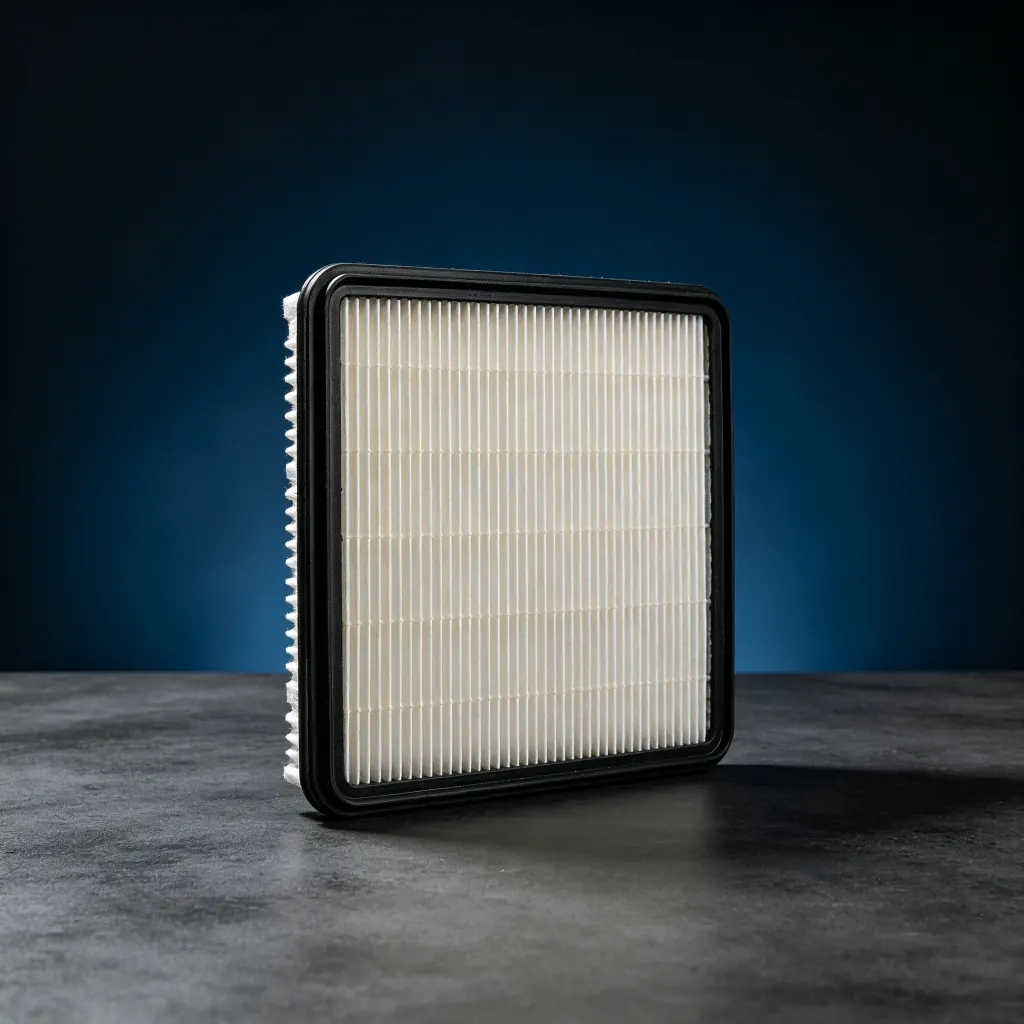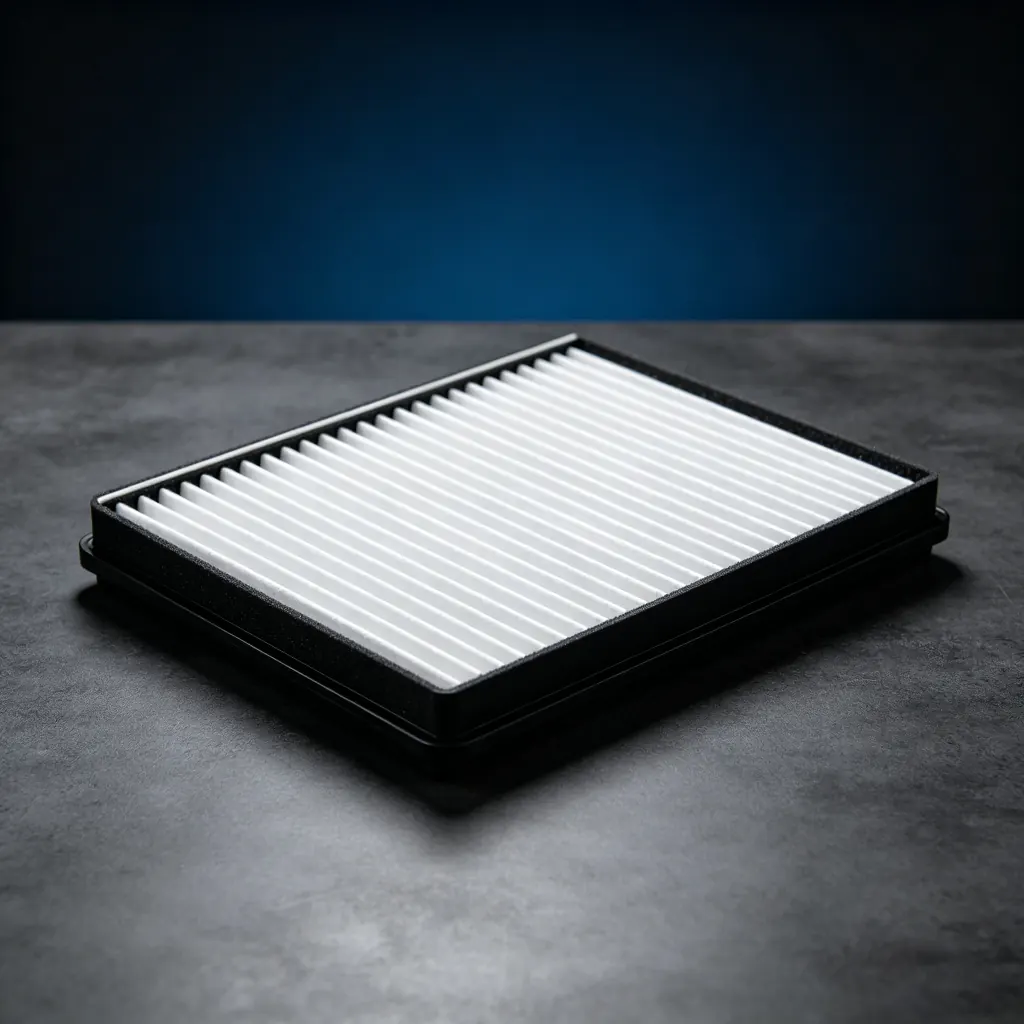
Every importer of filtration parts runs into the same question: how do you buy a filter that fits like the original, without paying original prices? The answer is not a cheaper copy. It is a properly cross-referenced OEM alternative, and the difference between the two is documentable part by part.
This guide covers what the term actually means, how a cross-reference is built, the quality markers that separate a real alternative from a budget copy, and what to send a supplier so the quote comes back accurate the first time.
What OEM Alternative Actually Means
Three terms get used interchangeably in filter sourcing. The differences matter the moment you compare quotes.
- OE (Original Equipment): the part sold by the vehicle manufacturer under its own brand and its own number, in its own box.
- OEM: the company that built that part for the vehicle manufacturer. An OEM part is frequently the same production line, sold under the component maker name.
- OEM alternative: a filter built to the OE specification - same dimensions, same media grade, same sealing geometry - by a filtration manufacturer that does not supply that particular vehicle brand. It is not a genuine part and is never presented as one.
For a distributor the practical difference is price, packaging and traceability, not fitment. A correctly cross-referenced alternative drops into the same housing with the same seal. What changes is who made it and what the box says.
How a Cross-Reference Is Built
A cross-reference is not a guess based on vehicle model. It is built outward from the OE number in four steps.
- Step 1 - Read the OE number from the original part, its housing, or the vehicle parts catalogue.
- Step 2 - Match the application list: every engine variant, model year and market that used that number.
- Step 3 - Match the physical specification: outer diameter, inner diameter, height, pleat count, media type and gasket profile.
- Step 4 - Assign our own reference and record every interchangeable number against it, so the same filter can be quoted against five different brand numbers.
Step 3 is where most cheap listings fail. Two filters can share the outer dimensions of an OE number and still differ in pleat count or gasket height. That shows up as a poor seal, dust bypass and a comeback six months later, long after the container has been paid for.
OE Number Formats You Will Meet
OE numbering is not standardised across manufacturers. Recognising the pattern helps you catch a mistyped reference before it becomes a wrong shipment. The prefixes below are format illustrations, not a substitute for the vehicle parts catalogue.
| Brand group | Typical format | Prefix illustration | What the prefix tells you |
|---|---|---|---|
| Toyota / Lexus | 10 digits in two groups | 17801-##### (engine air), 87139-##### (cabin) | The five-digit prefix identifies the part family |
| Nissan | 5 digits, hyphen, 5 alphanumeric | 16546-##### | 16546 is the engine air filter family |
| Honda | Three groups, 5-3-3 | 17220-###-### | Air and cabin filters use different prefixes |
| Volkswagen / Audi | Three groups of three | 1K0 129 6## | Platform code, part family, then variant |
| Mercedes-Benz | Letter A plus 10 digits in four groups | A ### 090 ## ## | The 090 block marks the filter family |
| BMW | 11 digits in five groups | 13 71 7 ##### | Leading 13 points to the engine intake group |
| MANN aftermarket | Letter code plus spaced digits | C ## ### / CU ## ### / HU ## ### | C = engine air, CU = cabin, HU = oil element |
OEM Alternative vs Genuine vs Budget Copy
The three products can look identical in a photograph. They do not measure the same. These are the checks we run on every batch, and the ones you can ask any supplier to document.
| Criterion | OEM alternative | Genuine (OE box) | Budget copy |
|---|---|---|---|
| Filter paper weight | 100-130 g/m² | 100-130 g/m² | 70-80 g/m², tears under load |
| Pleat count | Matched to the OE specification, even spacing | Matched | Fewer pleats, uneven spacing |
| End seal | Uniform PU seal at the correct height | Uniform | Soft or short seal, allows air bypass |
| Support mesh | Metal or plastic mesh on both faces | Both faces | One face, or none |
| Carbon content (cabin) | 400-600 g/m² activated carbon | 400-600 g/m² | Thin carbon spray |
| Production standard | IATF 16949 certified production lines | IATF 16949 | Unverified |
| Batch traceability | Batch and reference recorded per carton | Full OE traceability | None |
| Warranty | 12 months against manufacturing defects | Vehicle manufacturer terms | Usually none |
Print the two tables above and take them to your next supplier meeting. A supplier who cannot answer the pleat count and paper weight questions is selling a copy, not an alternative.
What to Send for a Cross-Reference Quote
Accuracy depends on the input. A list of vehicle models produces guesswork; a list of numbers produces a quote.
- OE numbers for each reference, or the vehicle make, model, year and engine code if the number is unreadable.
- Filter type per line: engine air, cabin air, oil, fuel or hydraulic.
- Annual volume per reference, and whether the order will be a single shipment or scheduled releases.
- Target market and packaging: neutral cartons, shrink wrap, or your own brand with barcode and language-specific artwork.
We return the matched references with dimensions, media type and pricing, and flag any OE number that has more than one physical variant in the field. Those flags are the ones that save a container.
MOQ, Lead Time and Warranty
Terms are the same for first orders and repeat orders. There is no separate small-order price ladder, which is why distributors consolidate references into one shipment.
| Commercial term | Standard |
|---|---|
| Minimum order quantity | 500 pcs per reference; mixed references can ship together |
| Production lead time | 25-30 days after deposit and artwork approval |
| Samples | Free samples in 7-10 days, freight collect |
| Warranty | 12 months against manufacturing defects |
| Packaging | Neutral, shrink wrap, or your own brand with barcode and language-specific artwork |
Common Cross-Reference Mistakes
- Cross-referencing by vehicle model only. The same model year can carry two different filter housings depending on engine and market.
- Ignoring the gasket height. A filter that seats loosely passes a visual check and fails in service.
- Mixing carbon and particle references. They share dimensions and differ in price by 30-50%, so a swapped line is a margin problem, not a fitment problem.
- Trusting a marketplace listing as the reference. Marketplace titles are frequently a copy of a copy. Verify against the parts catalogue, then against the physical part.
- Quoting without a sample. A production sample takes 7-10 days and settles the pleat, seal and media questions before money moves.
Conclusion
An OEM alternative is a manufacturing claim, not a marketing label. It holds up when the cross-reference is documented, the media meets OE grade and the batch can be traced. Ask for the pleat count, the paper weight and the gasket height in writing, and the difference between an alternative and a copy becomes obvious in one email.
If you are consolidating references for a market entry, send us the list and we will return the matches with specifications. Our air filter, cabin filter and oil filter ranges all follow the same cross-reference process.
Frequently Asked Questions
What does OEM alternative filter mean?
A filter made to the original equipment specification by a manufacturer that does not supply that vehicle brand. It matches the OE dimensions, media grade and sealing geometry, is sold under a different brand, and is never presented as a genuine part.
Is an OEM alternative as good as a genuine filter?
When the cross-reference is correct and the media meets OE grade - 100-130 g/m² paper for engine air, 400-600 g/m² carbon for cabin - performance is equivalent. The risk is not the concept but the supplier: budget copies use 70-80 g/m² paper, fewer pleats and a short seal, which allows air and dust to bypass the media.
How do I find the OE number for my filter?
Read it from the old part or its housing, or from the vehicle parts catalogue. Cabin filters are behind the glove box on most vehicles. If the number is worn, send the VIN or engine code and we will match by application instead.
What is the minimum order for OEM alternative filters?
500 pcs per reference. Mixed references can be combined in one order and one shipment. Production takes 25-30 days after deposit and artwork approval, and every reference carries a 12-month warranty against manufacturing defects.
Do you supply both standard and activated carbon cabin filters?
Both, plus antibacterial versions. Particle and carbon filters share the same housing dimensions, so they cross-reference identically. Carbon versions carry a 30-50% price premium over particle filters and sell best in urban markets with visible air quality problems.